Biases in decision making
Biases in decision making are one of the most dangerous pitfalls during an innovation process. Dangerous because organizations are not aware of the biases, feel overconfident and pursue routes that do not make a difference to the customer or even fail.
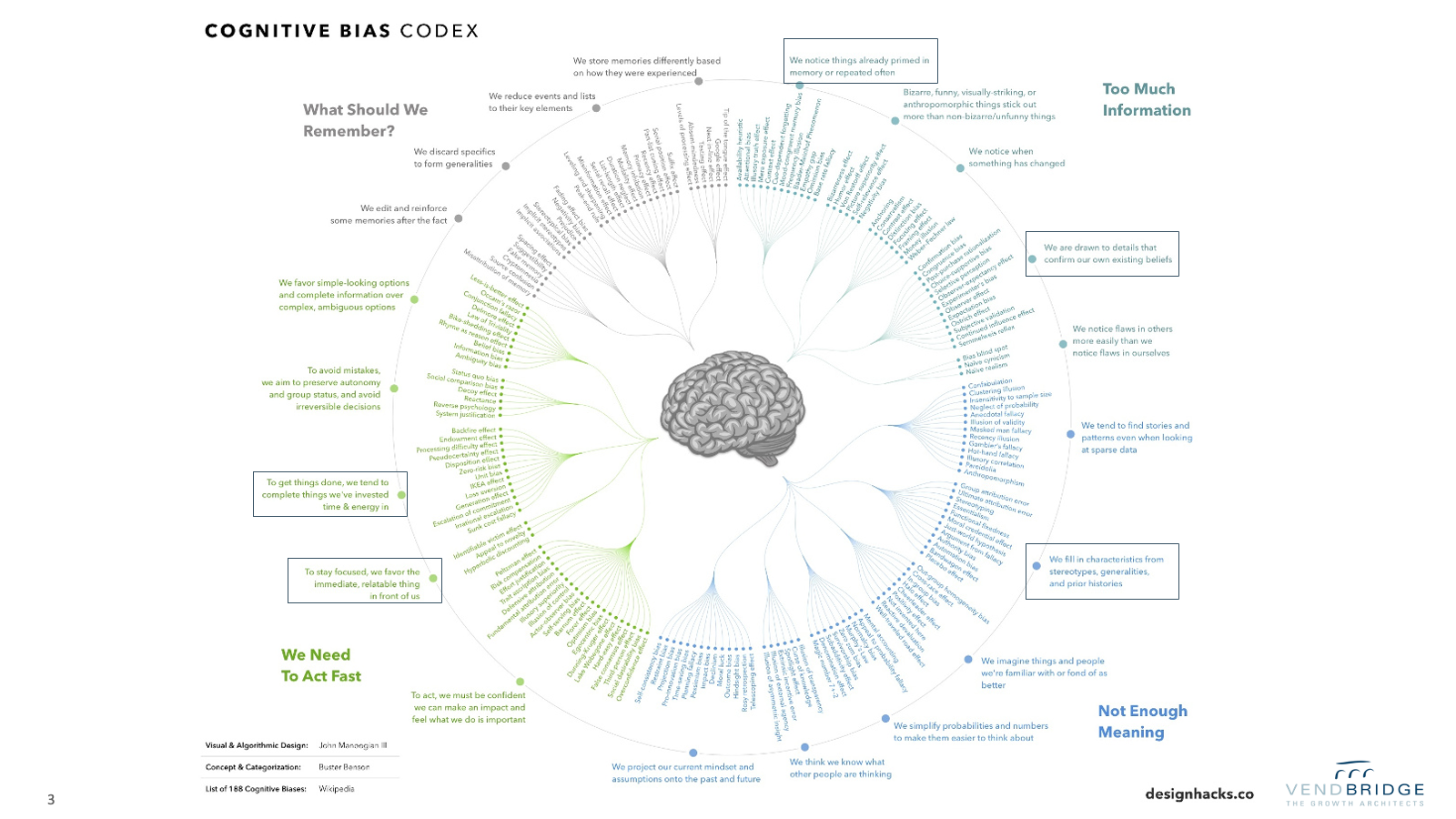
We researched the literature on cognitive biases in judgement and decision making and analyzed which biases mostly hinder innovation and growth success. They are:
Repetition Bias: We tend to believe things that are often repeated
Confirmation Bias: We tend to only use information that confirms our preexisting believes
Stereotyping: We tend to fill in characteristics from stereotypes, generalities and prior histories
Recency Bias: We tend to attribute more value to new information compared to older information
Sunk Cost Fallacy: We tend to hold on to things in which we have invested a lot of time or money.
CFI is designed to overcome biases systematically and produce insight that is backed up by qualitative and quantitative data.
By framing the problem from the customers point of view and interviewing them about what they do, think and feel during their customer journey we gather qualitative insight that already prevent a large portion of potential stereotyping and recency bias. By quantifying those insights we can further reduce the confirmation and repetition bias.
Spinning the results into actionable ideas that target the actual customer problems avoids the sunk cost fallacy when developing new products or services.
In short; CFI de-biases your innovation decision making and challenges assumptions and believes in the organization with hard facts.